
PR Trends for 2025
Why Middle-Market Brands Are Rethinking PR: The Shift to Agencies, AI and Revenue-Driven Communications


The PR industry is undergoing a seismic shift. The old rules—where PR firms were paid just for media placements—are fading fast. Middle-market brands no longer just need press coverage; they need strategic communications that drive revenue, credibility and competitive advantage.
At TrizCom PR, we’ve embraced these changes early. We see the biggest shifts in PR happening in:
Brands hiring agencies instead of adding full-time PR staff
AI transforming PR workflows & creating new agency revenue models
PR agencies training clients that take PR in-house
Performance-based contracts replacing traditional retainers
PR shifting from activity-based billing to business impact models
Owned media driving more revenue & credibility for brands
The PESO Model (Paid, Earned, Shared, Owned) becoming the industry standard
Let’s break down why these shifts matter—and why hiring an agency like TrizCom PR is the smartest move a middle-market brand can make.
Why Brands Are Hiring PR Agencies Instead of Adding Full-Time Staff
The Shift from In-House PR to Agency Partnerships
More and more companies are choosing to outsource PR to agencies rather than building expensive in-house teams. The decision is no longer just about cost; it’s about agility, specialization and measurable impact. For middle-market companies, PR is not an everyday function that justifies a full-time hire, but the need for strategic media relations, crisis management and thought leadership is more important than ever.
Hiring an in-house PR professional may seem like a logical step, but the costs quickly add up. The average salary for a mid-level PR professional ranges between $85,000 and $120,000 per year, not including benefits, training or turnover costs. However, this salary is only part of the expense. To properly execute a PR strategy, brands must also invest in PR subscription-based software, which can cost upwards of $100,000 annually. These PR tools—ranging from media databases and press monitoring platforms to AI-driven analytics—are essential for effective PR execution, but they are often too costly for a single brand to justify. Agencies, on the other hand, already have enterprise-level access to these resources, spreading the cost across multiple clients and ensuring brands benefit from top-tier PR technology without the hefty price tag.
Why Agencies Offer a Better ROI Than In-House PR Teams
Beyond cost, the flexibility and scalability of agency partnerships make them an increasingly attractive choice. PR is not a static function; some months demand intensive media outreach, while others focus on brand positioning and owned content. Agencies provide this adaptability, adjusting their efforts according to shifting business priorities. Additionally, agencies offer faster execution and stronger media relationships, which in-house teams often struggle to build from scratch.
Journalists receive hundreds of pitches a day and trust agencies with a track record of delivering credible, well-prepared sources. Agencies like TrizCom PR have cultivated these relationships over years, ensuring that their clients gain visibility in the conversations that matter most. An in-house PR manager, no matter how skilled, will struggle to match the immediate access and credibility that an agency provides.
Another key advantage of agency partnerships is crisis management expertise. PR isn’t just about securing positive press—it’s about protecting reputations when the stakes are high. Many in-house teams lack the crisis experience needed to navigate public scrutiny effectively. Agencies, on the other hand, have managed crises across industries, from product recalls to executive misconduct and know how to respond quickly, control narratives and rebuild public trust.
2. PR Agencies Are Now Training Clients Who Take PR In-House
The Rise of Hybrid PR Models
While many companies are opting for agencies over in-house teams, some still want to build internal PR capabilities—but they quickly discover a major roadblock: they lack the expertise to train their teams properly. This has led to a new PR model where agencies don’t just execute campaigns but train internal marketing teams on media relations, crisis management and digital strategy. Instead of losing these companies as clients, agencies are now positioning themselves as PR educators, offering ongoing consulting, playbooks and strategic oversight to help in-house teams thrive.
Why Brands Need PR Training, Not Just Execution
Many marketing teams struggle with PR because it requires a different skill set from traditional marketing or advertising. Writing a blog post or running a paid ad campaign is one thing, but crafting a compelling media pitch, securing top-tier press and handling journalist relationships require specialized knowledge. Agencies like TrizCom PR are now stepping in to bridge this knowledge gap. Through customized media training sessions, we teach internal teams how to craft effective pitches, respond to press inquiries and conduct on-the-record interviews with confidence. This ensures that brands can maintain day-to-day media interactions while still relying on agency support for high-level strategy, reputation management and complex PR challenges.
Beyond media training, agencies are also helping brands develop crisis communication playbooks to prepare for potential public relations threats. These playbooks outline step-by-step protocols for handling negative press, social media backlash or corporate crises, ensuring that teams know exactly what to do when an issue arises. Agencies also help companies integrate the PESO (Paid, Earned, Shared, Owned) model into their PR strategies, ensuring that their PR efforts work seamlessly across all communication channels, from traditional media to owned content and influencer collaborations.
How Agencies Support Internal PR Teams with AI and Analytics
Another key area where agencies are stepping in is AI-powered PR strategy. Many brands are now using AI tools for media monitoring, press release optimization and sentiment analysis, but without proper guidance, they struggle to maximize the value of these tools. Agencies are helping companies leverage AI-driven insights to refine messaging, predict media trends and track PR performance in real-time, ensuring that in-house teams stay ahead of the curve.
This new hybrid model—where agencies provide training, strategic oversight and ongoing support rather than just execution—allows companies to gain more control over their PR while still benefiting from expert guidance. Instead of functioning as mere service providers, agencies are becoming long-term PR partners, helping brands transition into more sophisticated communicators.
The Future of PR Training: Agencies as Long-Term Partners
The demand for in-house PR training and strategic consulting is only growing and agencies that position themselves as PR educators and long-term strategic partners will be the ones that thrive in this evolving industry. As PR continues to integrate with owned media, thought leadership and digital strategy, the role of agencies will shift from simply “getting press” to empowering brands to take control of their own narratives—while still relying on agencies for the high-level expertise they can’t get anywhere else.
3. AI Is Changing PR—But Not in the Way You Think
Beyond Automation: AI’s Role in Strategic PR
As artificial intelligence continues to disrupt industries, there has been growing speculation about whether AI will eventually replace PR professionals. However, the reality is that AI is not replacing PR experts—it’s making them more efficient, data-driven and valuable. The agencies that understand how to integrate AI into their PR strategies will outperform competitors and generate better results for their clients.
At TrizCom PR, we use AI as a tool for amplification, automation and analytics—allowing us to spend more time on high-value strategic work while eliminating time-consuming manual tasks. AI enhances PR in three critical areas: media monitoring, predictive analytics and content optimization.
AI-Driven Media Monitoring: Measuring PR Impact in Real-Time
Traditionally, measuring PR success was a slow and cumbersome process. Companies relied on clipping services, manually tracked media mentions and outdated audience measurement tools to determine PR impact. Today, AI-powered media monitoring platforms provide real-time insights into brand sentiment, media coverage and audience engagement.
With AI-driven tracking, we can instantly assess the reach and impact of media placements, identify key influencers amplifying content and measure the sentiment of PR coverage. This allows brands to react faster, optimize messaging in real time and ensure that PR efforts are aligned with business goals.
For example, one of our technology clients used AI-powered media tracking to identify which industry publications were driving the most referral traffic to their website. By reallocating PR efforts toward higher-performing outlets, they were able to increase inbound leads by 40% without increasing media spend.
Predictive Analytics: Understanding Media Trends Before They Happen
Another major benefit of AI is predictive analytics, which enables agencies to forecast media trends, identify potential crises (issues management) before they escalate and anticipate how journalists will cover specific topics. By analyzing thousands of articles, social media posts and news cycles, AI can help PR teams refine messaging strategies and prepare proactive campaigns before the competition even sees the opportunity.
For example, when a policy shift in the healthcare industry was set to dominate the news cycle, we used AI-driven predictive analytics to position a client as a thought leader before their competitors had a chance to react. By proactively offering expert commentary and securing interviews ahead of the trend, we helped our client gain national media exposure and position themselves as a go-to source for healthcare insights.
AI-Enhanced Content Optimization: Writing Smarter, Not Harder
AI is also transforming how content is created, optimized and distributed. While AI-generated content still lacks the nuance and creativity of human writing, it can significantly streamline first-draft creation, optimize content for SEO and analyze engagement metrics to improve effectiveness.
At TrizCom PR, we use AI to analyze headline performance, refine messaging for different audience segments and optimize press releases for search engines. This allows us to ensure that every piece of content we create is strategically aligned with audience interests and media trends.
One of our most successful AI-driven content strategies involved using machine learning to analyze which press release headlines were most likely to be picked up by journalists. By integrating this data into our PR process, we increased media pickup rates by 32% across multiple clients in the healthcare and B2B sectors.
AI in PR: The Future Is About Strategy, Not Automation
While AI can automate certain PR tasks, it cannot replace the human intelligence, relationship-building and strategic thinking that define effective PR campaigns. Agencies that treat AI as a complementary tool rather than a replacement for expertise will thrive, while those that ignore AI risk falling behind.
The biggest winners in the AI-PR shift will be agencies that:
Use AI to enhance decision-making and predictive analytics
Leverage automation to eliminate repetitive tasks and improve efficiency
Maintain a strong human connection with media, influencers and audiences
As AI technology continues to evolve, TrizCom PR is committed to staying at the forefront of AI-driven PR innovation—ensuring that our clients not only keep up with industry trends but lead the conversation.
AI Is Not a Threat—It’s an Opportunity
For brands wondering whether AI will replace PR agencies, the answer is clear: AI is making PR agencies more valuable than ever. By integrating AI into media strategy, predictive analytics and content optimization, PR firms can deliver faster, smarter and more impactful results.
The future of PR isn’t about automation replacing human intelligence—it’s about AI enhancing the way agencies drive media impact, brand trust and business growth. Agencies that adapt AI into their workflow now will be the ones leading the PR industry in the years ahead.
4. Performance-Based PR: No More Paying for “Activity”
The Shift from Retainers to Performance-Based PR
For decades, PR agencies operated on a traditional monthly retainer model, where clients paid for time and effort rather than concrete results. While this model worked in an era when media visibility was difficult to track, today’s businesses are demanding a more measurable return on their PR investments.
In response, a growing number of agencies—including TrizCom PR—are shifting toward performance-based PR contracts that focus on measurable business outcomes rather than just hours worked. Instead of simply securing media placements, agencies are being held accountable for the real impact of their PR efforts on lead generation, brand awareness and revenue growth.
Why the Traditional PR Retainer Model Is Fading
The old PR model was focused on activity rather than impact. Agencies would track the number of press releases issued, media pitches sent and reporter meetings scheduled, but clients were often left wondering: How does this actually help my business?
Performance-based PR changes that dynamic by tying compensation to tangible results. Brands now expect PR firms to deliver outcomes, not just action—whether that’s measured in media reach, inbound lead generation or website traffic driven by PR campaigns.
How Performance-Based PR Works
Under the new model, PR agencies structure contracts around key performance indicators (KPIs) that directly align with a client’s business goals. These may include:
· Earned Media Impact: Number of high-authority media placements in top-tier outlets.
· Website Traffic from PR Efforts: Measurable increases in referral traffic from media coverage.
· Lead Generation Metrics: PR-driven inbound leads that convert into sales opportunities.
· Brand Sentiment & Share of Voice: How PR efforts improve brand perception in the marketplace.
At TrizCom PR, we work with clients to define clear success metrics upfront, ensuring that PR investments contribute directly to business growth.
The Future: Why More PR Agencies Will Move to Outcome-Based Pricing
The shift to performance-based PR is not just a trend—it’s the future of the industry. Clients no longer want to pay for activity without results and agencies that fail to adapt will struggle to compete.
At TrizCom PR, we believe that every PR dollar spent should drive measurable impact. Whether it’s increasing visibility, generating leads or improving brand reputation, PR should be a growth driver, not just a communications function.
5. PR Implementation Work Is Becoming a Commodity—Strategy Is King
The Decreasing Value of Basic PR Tasks
The PR industry is experiencing a fundamental shift: basic implementation services are becoming commoditized, while high-level strategy is in greater demand than ever.
In the past, PR agencies were hired primarily for execution—writing press releases, securing media interviews and drafting thought leadership articles. However, as more brands invest in owned media, AI-powered press release tools and direct media outreach, the value of these basic services is declining.
Today, brands need more than just press releases—they need a comprehensive strategy that aligns PR with business goals, audience behavior and digital marketing efforts.
Why Execution-Only PR Agencies Are Struggling
As media relations becomes increasingly data-driven, companies are realizing they don’t need an agency just to write and distribute press releases. Automated platforms like Cision, Muck Rack and AI-powered content tools are making it easier than ever for brands to handle simple PR tasks in-house.
For PR agencies, this means that execution alone is no longer enough. To remain valuable, agencies must:
Go beyond media relations and integrate PR with digital marketing, owned media for organic search and thought leadership.
Use behavioral insights to shape PR strategies that influence decision-making.
Leverage AI for data-driven campaign planning, media monitoring and performance analytics.
How TrizCom PR Elevates PR Strategy Beyond Execution
At TrizCom PR, we focus on behavioral PR, AI-driven media analytics and high-impact storytelling—ensuring that PR efforts don’t just generate media coverage but actually influence business outcomes.
Our strategic approach includes:
Behavioral PR Insights: Understanding how audiences process and engage with media stories.
Data-Driven Media Strategies: Using AI-powered tools to track media sentiment and optimize PR messaging.
Owned Media & Thought Leadership: Positioning clients as industry experts through in-depth content, podcast features and LinkedIn strategies.
The Future of PR: Strategic Advisors, Not Just Publicists
The future of PR belongs to agencies that move beyond implementation work and act as strategic advisors. Brands no longer just need an agency to execute press releases or handle social media mentions—they need partners who can build PR strategies that create sustained brand authority and business growth.
At TrizCom PR, we are committed to helping brands move beyond short-term media wins to long-term reputation and revenue-building strategies. This means:
Focusing on business outcomes rather than just press hits.
Leveraging AI and data analytics to refine PR campaigns in real-time.
Developing owned media assets that build brand authority beyond earned media.
Why PR Must Evolve
As PR implementation services continue to race to the bottom in pricing, the real value in PR is shifting toward strategy, data analysis and thought leadership positioning.
Agencies that fail to evolve will become obsolete, while those that embrace behavioral insights, AI-driven analytics and measurable PR outcomes will lead the next era of communications.
The takeaway? Brands that invest in high-level PR strategy rather than basic execution will gain a stronger competitive advantage—and the agencies that deliver that strategy will become indispensable partners in their success.
6. Driving Revenue Through Owned Media
The Shift from Earned Media to Revenue-Generating Owned Media
For years, brands have relied primarily on earned media—press coverage in third-party publications—as the cornerstone of their PR efforts. However, as media outlets shrink and paid advertising becomes more expensive, smart brands are shifting their focus to owned media as a key driver of audience engagement and revenue growth.
Owned media includes company blogs, branded newsletters, podcasts, webinars and social media channels—platforms where brands own the audience relationship and control the messaging. Unlike traditional PR efforts that depend on media gatekeepers, owned media allows companies to establish direct connections with their audience, nurture brand loyalty and monetize content in ways that traditional media coverage cannot.
Why Owned Media Matters More Than Ever
While earned media is still valuable, its impact is often short-lived—an article may drive traffic for a few days or weeks, but then disappears in the constant churn of news cycles. In contrast, owned media compounds over time, building long-term brand authority and acting as a lead generation engine.
At TrizCom PR, we help clients develop strategic owned media programs that go beyond traditional PR, ensuring that they can:
Control their brand narrative without waiting for media approval.
Turn website visitors into leads by leveraging content marketing strategies.
Use thought leadership content to establish industry credibility beyond fleeting press mentions.
How TrizCom PR Helps Brands Monetize Owned Media
Owned media isn’t just about publishing content—it’s about turning that content into a revenue stream. Our approach includes:
Thought Leadership Campaigns: Helping executives build personal brands through LinkedIn articles, guest posts and speaking engagements.
SEO-Optimized PR Content: Ensuring that brand blogs and press releases rank in search engines, driving consistent traffic and lead generation.
Branded Newsletters & Email Marketing: Transforming PR campaigns into highly targeted, ongoing audience engagement strategies.
Why Owned Media Will Drive PR Success
With paid media costs rising and traditional PR becoming less predictable, brands that fail to develop a strong owned media presence will fall behind. PR is no longer just about getting coverage—it’s about building platforms where your audience finds value, trusts your brand and converts into long-term customers.
At TrizCom PR, we help brands move beyond a short-term media placement mindset and toward an owned media strategy that delivers sustained, measurable business impact.
7. The PESO Model (Paid, Earned, Shared, Owned) Becomes the New Standard
The End of Siloed PR Strategies
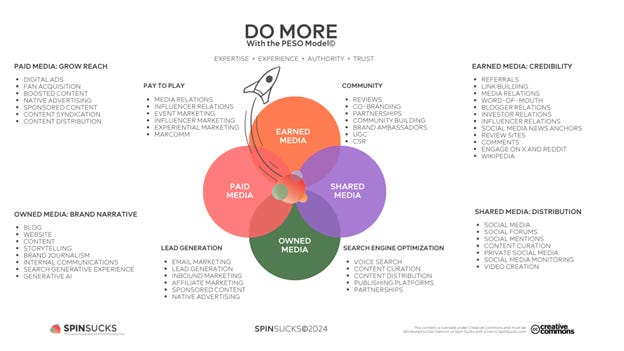
The days of treating PR as a standalone function are over. Today, the most successful brands use an integrated approach that combines Paid, Earned, Shared and Owned media (PESO Model) to maximize visibility, engagement and revenue.
The PESO Model originally developed by Gini Dietrich of Spin Sucks, has become the industry standard for modern PR strategies because it ensures that brands aren’t relying on just one channel to tell their story. Instead, they strategically distribute content across multiple platforms for greater reach and higher ROI.
Breaking Down the PESO Model
Paid Media → Promoted content, digital ads and sponsored placements that boost visibility.
Earned Media → Traditional PR—media placements, influencer endorsements and third-party validation.
Shared Media → Social media engagement, influencer collaborations and community-driven content.
Owned Media → Brand blogs, newsletters, podcasts and direct audience engagement.
For PR agencies, adopting the PESO Model isn’t just a recommendation—it’s a necessity. Clients expect PR to drive measurable business outcomes and relying solely on earned media (press placements) is no longer enough.
How TrizCom PR Implements the PESO Model
At TrizCom PR, we integrate PESO strategies into every campaign, ensuring that brands amplify their PR impact across multiple channels. Our approach includes:
Leveraging Paid Media to Amplify PR Wins → Using digital ads to extend the reach of major media placements and thought leadership articles.
Blending Earned & Shared Media for Greater Engagement → Turning press coverage into viral LinkedIn discussions and influencer collaborations.
Optimizing Owned Media for SEO & Lead Generation → Structuring PR content so that it drives long-term organic traffic and inbound inquiries.
By ensuring that all four PESO elements work together, PR efforts become more than just media mentions—they become sustained brand-building engines that drive revenue.
Why PESO Is the Future of PR
The PESO Model is becoming the gold standard because it ensures a diversified approach to brand storytelling. Relying solely on earned media is risky—media cycles are unpredictable and journalist turnover is at an all-time high. However, brands that invest in paid amplification, social engagement and owned media infrastructure will see greater, more sustained returns.
For brands looking to future-proof their PR strategy, PESO is no longer just an option—it’s a must-have framework. At TrizCom PR, we ensure that every PR initiative is not just about getting press—it’s about creating lasting impact across all channels.
Final Thoughts: The Future of PR Is Here—Are You Ready?
The PR industry is changing and brands that adapt to these shifts will dominate their industries. The key takeaways from the 2030 PR predictions are clear:
Hiring an agency is more cost-effective and scalable than in-house PR.
AI is transforming PR strategy, making agencies more valuable.
Performance-based PR is the new norm—brands expect results, not just activity.
Owned media is the future of brand authority and revenue generation.
The PESO Model is the only way to ensure PR success in the modern era.
At TrizCom PR, we’re at the forefront of these industry shifts, helping brands navigate the future of PR with data-driven strategies, behavioral insights and fully integrated PESO campaigns.
Is your brand ready for the next era of PR? Let’s talk:
jo@trizcom.com | 972-247-1369 or reach out at
Shout out to my fellow PRCG public relations pro, Matt Cookson of Cookson Communications for highlighting this list and to the originator, Sakas & Company, for the great insights in Agency Predictions 2030.
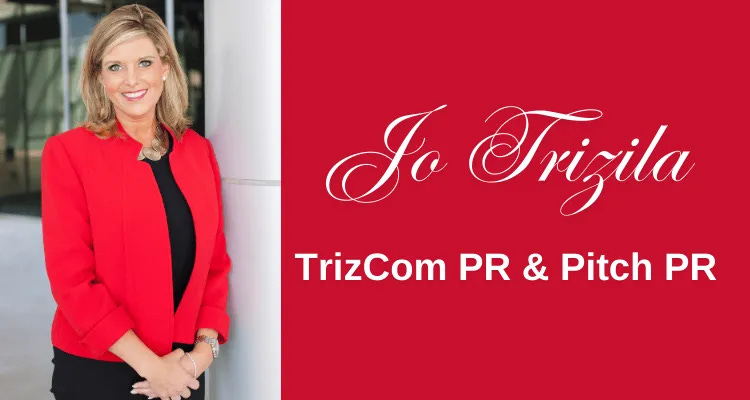
About the Author:
Jo Trizila – Founder & CEO of TrizCom PR
Jo Trizila is the founder and CEO of TrizCom PR, a leading Dallas-based public relations firm known for delivering strategic communications that drive business growth and enhance brand reputations as well as Pitch PR, a press release distribution agency. With over 25 years of experience in PR and marketing, Jo has helped countless organizations navigate complex communication challenges, ranging from crisis management to brand storytelling. Under her leadership, TrizCom PR has earned recognition for its results-driven approach, combining traditional and digital strategies to deliver impactful, measurable outcomes for clients across various industries, including healthcare, technology, and nonprofit sectors. Jo is passionate about helping businesses amplify their voices and connect with audiences meaningfully. Her hands-on approach and commitment to excellence have established TrizCom PR as a trusted partner for companies seeking to elevate their brand and achieve lasting success. Contact Jo at jo@TrizCom.com.